
Curriculum, Assessment & Screening
Play, Learn, Grow!
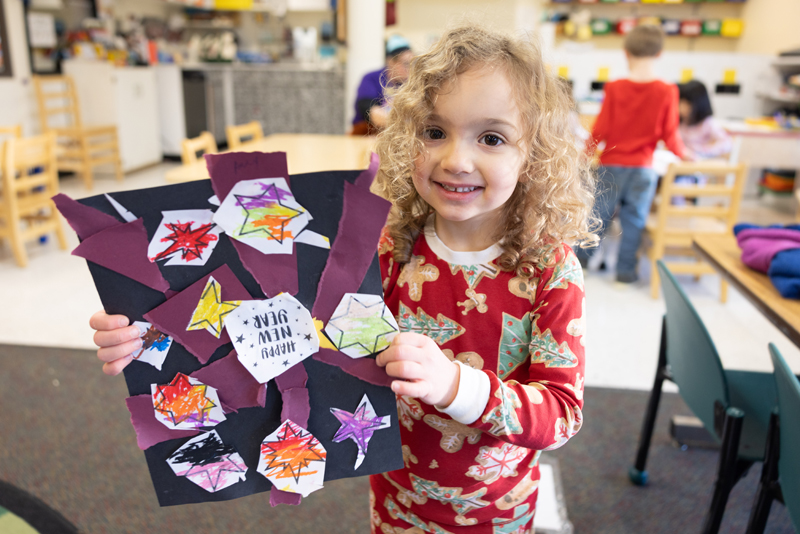
Our curriculum is thoughtfully designed to help each child grow socially, emotionally, and academically. At the Parent Child Center, we use developmentally informed approaches that encourage curiosity, problem-solving, and meaningful exploration to help children build confidence and kindergarten readiness.
Our approach reflects what research tells us young children need most: nurturing relationships, meaningful exploration, and learning experiences that grow with them. Whether children are infants, toddlers, preschoolers, or pre-K, our curriculum meets them where they are and supports each stage of development.
Questions about enrollment? Ready to schedule a tour?
What Curriculum Looks Like at PCC

Learning at the Parent Child Center is hands-on, engaging, and rooted in everyday experiences. Children learn by exploring their environment, asking questions, working together, and building friendships with their peers and caring relationships with their teachers.
Throughout the day, children may:
- Explore books, stories, and early writing materials
- Build early math skills through counting, patterns, and problem-solving
- Investigate nature, science, and cause-and-effect through play
- Express creativity through art, music, and movement
- Practice social skills like cooperation, communication, and self-regulation
Learning on a College Campus
One of the things that makes the Parent Child Center unique is our location on the campus of Shoreline College.
As a lab school, the Parent Child Center serves as a model early learning environment where high-quality early childhood education is thoughtfully practiced and supported. Children learn in nurturing classrooms led by experienced teachers, while also benefiting from carefully guided interactions with Shoreline College students and faculty.
Being part of an active college campus allows learning to extend beyond the classroom. Children regularly:
- Take guided field trips around campus to explore learning spaces
- Observe college classes in areas such as art and music
- Visit office spaces to say hello or even trick or treat
- Welcome college students into their classrooms for hands-on activities, including automotive exploration, wellness and health lessons, and creative projects
These experiences are always age-appropriate and intentionally designed to deepen learning, build confidence, and spark curiosity, while maintaining a safe, supportive environment for children.
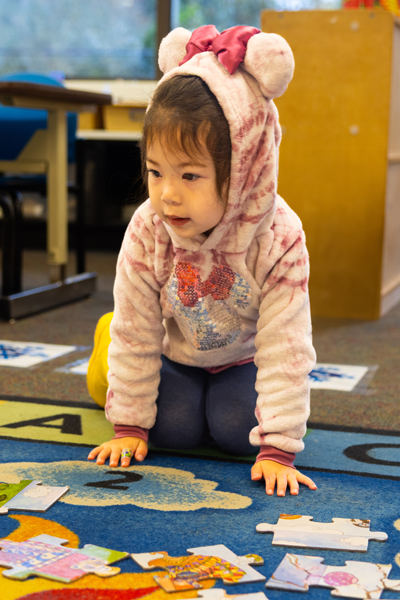
Our Curriculum Framework
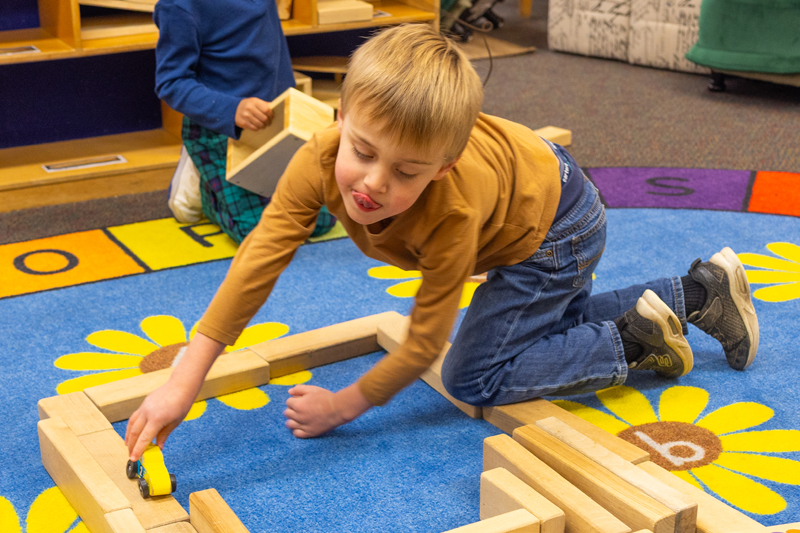
We use The Creative Curriculum® for Infants, Toddlers, Twos, and Preschool, a research-based, play-focused curriculum widely used in high-quality early learning programs.
- Infants & Toddlers
Learning centers on nurturing care, secure relationships, sensory exploration, and early language development. - Preschool
Children build early literacy, math, science, and social-emotional skills through intentional play, exploration, and guided learning experiences.
This approach allows teachers to respond to children’s interests while supporting independence, curiosity, and a strong sense of self.
In our application of developmentally appropriate practice, we have sought to highlight the important balance between applying a general knowledge of child development the particular knowledge a teacher gains by forming a relationship with each child and family. We have also incorporated new information about the content in literacy, math, science, social studies, the arts and technology that preschool children can and should learn. The curriculum describes each subject area and shows how to teach it in ways that support children’s academic progress while respecting the way they grow and develop.
—The authors of the Creative Curriculum
Assessment & Screening
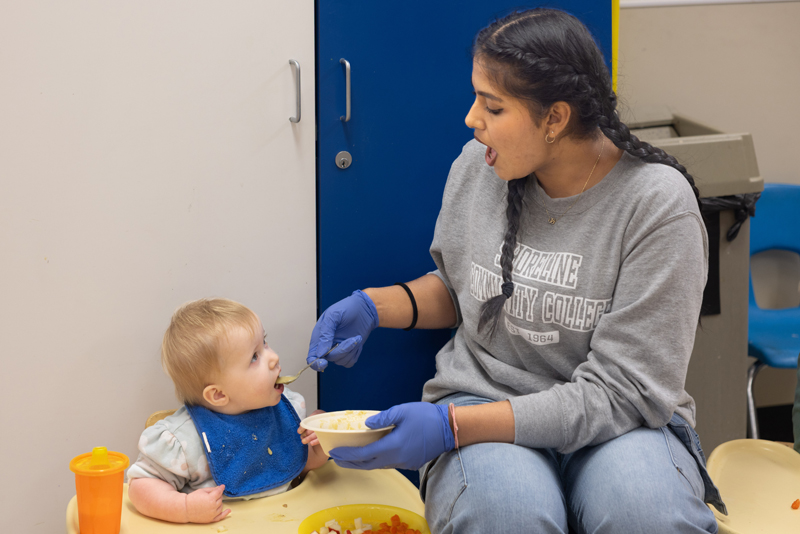
The Parent Child Center believes that authentic, ongoing assessment of children is a key to planning appropriate early childhood learning experiences and helping all children succeed. The PCC using the GOLD system of assessment. Teaching staff observe the children on an ongoing basis recording their observations. These observations are used to determine the developmental milestones that children are meeting and to plan activities and curriculum. The GOLD assessment is endorsed by Washington State’s Department of Early Learning and the Office of the Superintendent of Public Instruction as the kindergarten readiness assessment known as WAKIDS.
Upon enrollment in the program, parents complete the Ages and Stages Questionnaire (ASQ). The ASQ is a questionnaire designed to help parents check their child’s development. Parents and teaching staff use the results of the ASQ to talk about any concerns they may have about their child’s development. Early diagnosis and treatment of child development challenges can help give a child the best opportunity to reach his/her full potential.
Family Partnerships
At the PCC families are valued partners who are instrumental in a child’s learning. Teachers communicate regularly with families through daily conversations and the Brightwheel app, sharing updates, photos, and insights into children’s experiences. Together, we support each child’s growth in consistent and meaningful ways.

“I felt really safe bringing my children here. The staff was so friendly and so knowledgeable."
Laurie Carlsson, PCC Parent